



Beauty and pharmacy retail operate in fast-evolving environments where product assortments, promotions, and regulatory requirements change frequently. Managing thousands of small, high-value SKUs across multiple locations presents a unique operational challenge—particularly when accuracy, consistency and compliance are critical.
To support these demands, many beauty retailers and drugstores are adopting electronic shelf labels (ESLs) as a core enabler of modern, responsive store operations.
Operational Challenges in Beauty and Pharmacy Retail
Beauty and drugstores face a distinct combination of pressures.
Cosmetics stores typically manage dense assortments of small-format products with premium price points. Seasonal launches, promotional campaigns, and co-branded collections require frequent updates to shelf information. When relying on paper labels, store teams often spend significant time replacing signage manually, increasing workload and the risk of inconsistency.
Pharmacies and drugstores also operate under strict regulatory frameworks. Shelf labels must accurately reflect dosage guidance, ingredient information, and safety warnings. When formulations change or regulatory updates are issued, manual labeling processes can introduce compliance risks and operational delays.
Coordinating Promotions with Digital Price Tags
By deploying digital price tags, retailers can coordinate promotional activity more efficiently across all locations.
Coordinated Promotion Execution
Beauty promotions such as member-only offers, limited-time bundles, or seasonal campaigns can be scheduled and activated simultaneously across stores. This ensures pricing consistency between online channels, marketing materials, and the physical shelf—reducing friction at checkout and improving customer confidence.
Information Accuracy and Ingredient Transparency
Digital price tags allow retailers to present more than just pricing. Information such as key ingredients, usage guidance, or regulatory notices can be displayed clearly and updated remotely. This flexibility supports both consumer education and ongoing compliance without overcrowding the shelf space.
Inventory Visibility and Expiry Awareness
Electronic shelf labels equipped with LED indicators can assist store teams by highlighting low-stock items or batches approaching expiration. In drugstore environments, this capability supports better inventory rotation and reduces the risk of expired products remaining on display.
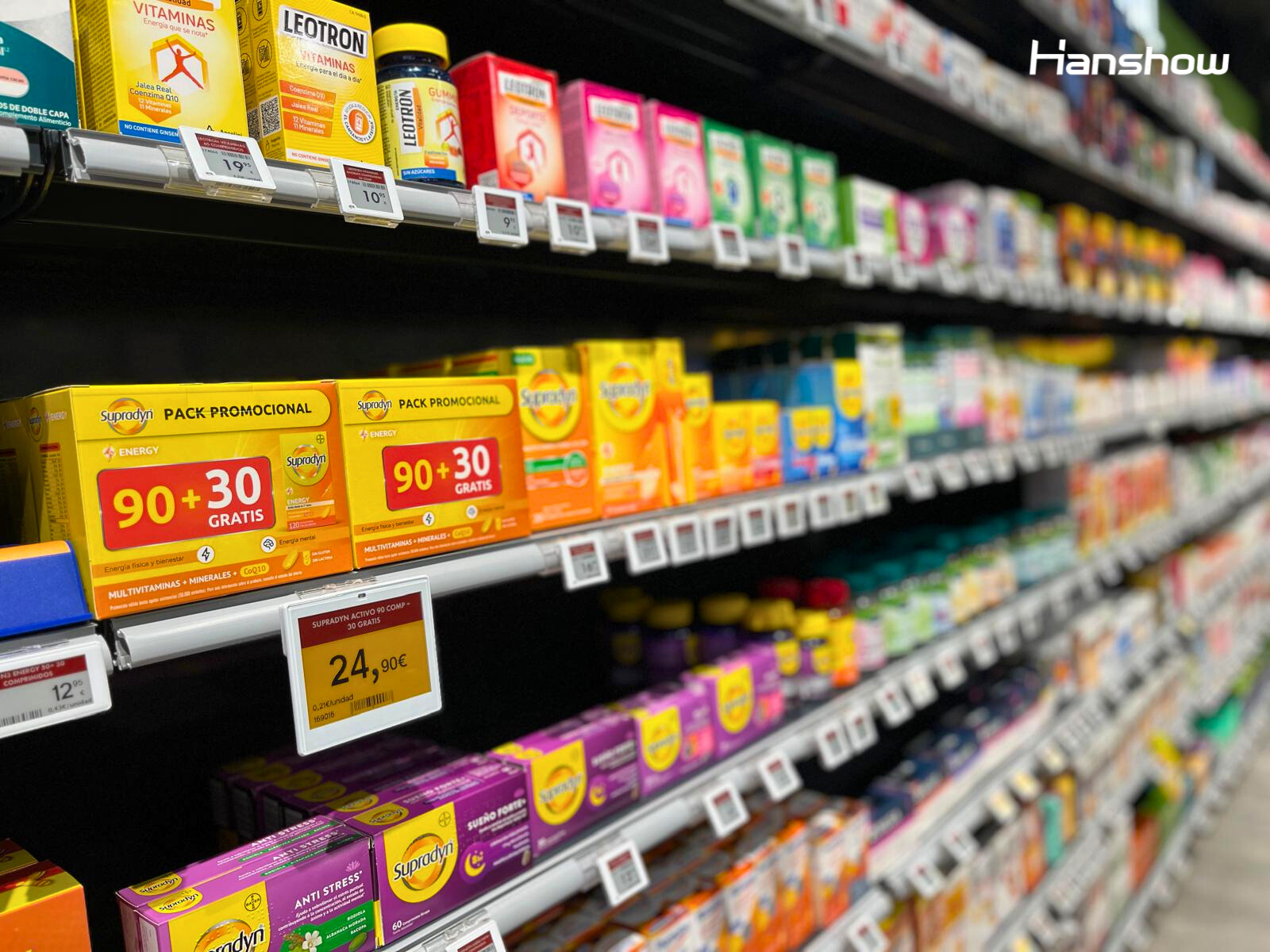
The Shelf as an Interactive In-Store Media Touchpoint
Today’s beauty shoppers often research products in-store while consulting digital sources. ESL-enabled shelves can help bridge this behavior by serving as an interactive information touchpoint.
By integrating QR codes into digital price tags, retailers can direct customers to tutorials, product explanations, or brand content. For example, a shopper browsing foundation products can access application tips or shade guidance directly from the shelf, enhancing the decision-making experience without increasing staff workload.
Deployment Strategy: Focus on High-Impact Categories
For beauty and wellness retailers, phased deployment is often the most effective approach. Priority categories typically include:
· Premium skincare and gift sets, where pricing changes are frequent and margins are high.
· Derma-cosmetics and functional beauty products, where ingredient transparency and indications influence purchase decisions.
· Fast-moving color cosmetics, including limited editions and seasonal collections.
Why Beauty and Drugstores Choose Hanshow ESL Solutions?
Hanshow provides comprehensive digital store solutions trusted by over 55,000 stores worldwide, supporting beauty and pharmacy retailers with reliable, scalable ESL technology.
Hanshow’s electronic shelf labels use E-paper displays that allow retailers to highlight promotions while maintaining a clean and consistent brand aesthetic. For enhanced visual communication, the Lumina series provides full-color LCD shelf-edge displays, making it well suited for beauty-focused retail environments.
All devices are managed through Hanshow’s centralized All-Star platform, enabling consistent updates and synchronized execution across thousands of locations—whether in flagship stores or neighborhood pharmacies.
Conclusion
By adopting electronic shelf labels beauty retailers and drugstores can significantly reduce manual workload, improve information accuracy, and coordinate promotions with greater confidence.
Rather than managing frequent updates through manual processes, ESL-enabled stores can focus on creating engaging, compliant, and customer-centric retail environments—supported by precise and reliable shelf-edge communication.